Doubling Down on Disruption: The Overlooked Price of Redundant Supply Networks

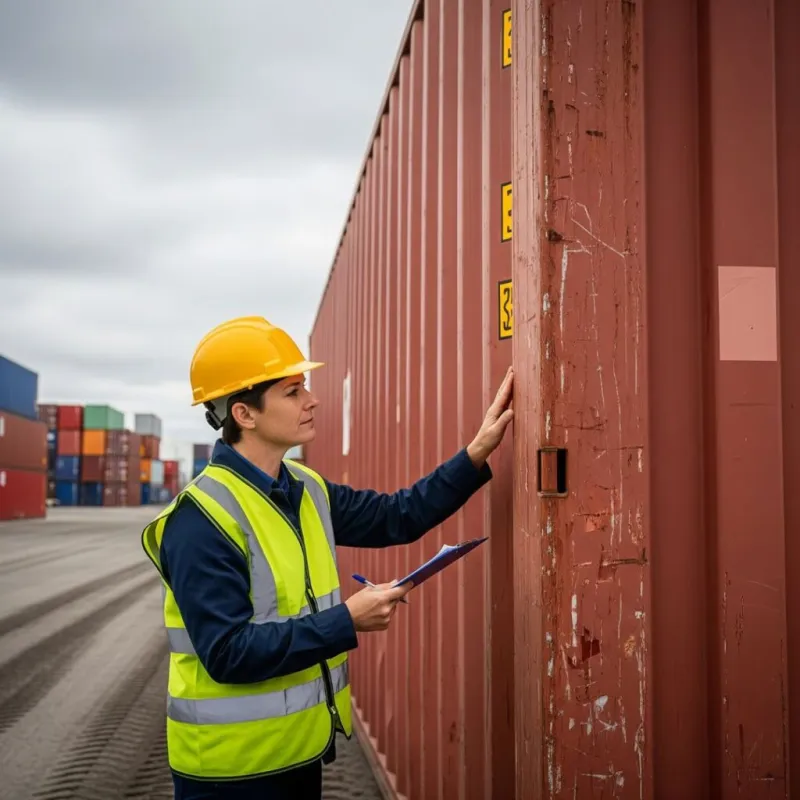
Photo by Photo by CHUTTERSNAP on Unsplash on Unsplash
The Resilience Paradox
When global supply chains fractured during the pandemic years, the instinct among American manufacturers was both understandable and swift: diversify. Add a second supplier in Vietnam. Qualify a backup facility in Mexico. Spread the risk across continents so that no single disruption could halt production. The logic was sound in theory, and boardrooms across the country approved the strategy with little resistance.
Yet several years into this broad diversification push, a quieter reckoning is underway. Operations leaders are discovering that redundant sourcing networks carry a price tag that rarely appeared in the original risk models—one that compounds over time and, in many cases, leaves companies more exposed than they were before they started building their so-called resilient supply base.
The term for this phenomenon is increasingly being called the parallel sourcing penalty. Understanding it is not an argument against supplier diversification. It is an argument for doing it with far greater precision.
Where the Hidden Costs Accumulate
The most visible layer of the parallel sourcing penalty is straightforward: maintaining two or more qualified suppliers for the same component requires duplicated onboarding effort, redundant quality audits, separate logistics relationships, and divided purchase volumes that dilute the leverage any single buyer holds over pricing. For large enterprises with dedicated procurement teams, these costs are manageable. For mid-market manufacturers—the backbone of American industrial output—they represent a significant and often underestimated drain.
But the less visible costs are where the real damage occurs.
When a company sources the same part from two geographies, it rarely achieves perfect specification parity. Subtle differences in materials, tolerances, or manufacturing processes mean that engineering and quality teams must manage two sets of documentation, two validation cycles, and two streams of nonconformance data. Over time, this divergence widens. What began as a straightforward backup supplier gradually becomes a parallel product line, demanding parallel attention from functions that were never staffed to handle it.
Inventory management compounds the problem further. Parallel sourcing typically requires safety stock buffers at multiple nodes—buffer inventory held near the primary supplier, buffer inventory held domestically, and sometimes buffer inventory positioned near assembly lines to account for the variability in lead times between geographies. Each buffer carries a carrying cost. Each buffer requires warehouse space. Each buffer introduces the risk of obsolescence, particularly in industries where product cycles move quickly.
Taken together, these costs can add between eight and fifteen percent to total landed cost for components managed under a parallel sourcing model—a figure that rarely surfaces in the initial business case for diversification.
The Vulnerability That Diversification Creates
Perhaps the most counterintuitive finding from companies that have audited their parallel sourcing programs is this: spreading supply across more geographies does not automatically reduce exposure to disruption. In many cases, it multiplies the number of points at which disruption can occur.
Consider a manufacturer that sources a critical assembly from both a Southeast Asian facility and a nearshore Latin American partner. Each relationship introduces its own set of geopolitical sensitivities, regulatory environments, currency fluctuations, and logistics dependencies. A port labor dispute in one region, a sudden tariff adjustment affecting another, or a quality failure at either facility creates a crisis that the company must manage simultaneously with its primary production schedule.
More critically, parallel sourcing often creates what supply chain analysts describe as diffused accountability. When two suppliers share responsibility for the same component category, neither has the commercial incentive to invest deeply in the customer relationship. Lead time improvements, capacity reservations, and collaborative problem-solving—the behaviors that actually define a resilient supplier partnership—tend to flow toward customers who represent concentrated, committed volume. A buyer who has made clear that its business is split between two vendors is, by definition, offering neither vendor the full commercial relationship that drives preferential treatment.
What Genuinely Resilient Companies Do Differently
The organizations that have navigated supply chain volatility most effectively over the past several years share a common characteristic: they distinguish sharply between diversification as a default posture and resilience as a deliberate architecture.
Rather than reflexively qualifying backup suppliers for every category, they conduct rigorous criticality assessments that identify which components genuinely warrant dual sourcing and which can be protected through other means—strategic inventory positioning, flexible contract structures, or deeper integration with a single trusted partner who has demonstrated the capacity to scale under pressure.
For the components that do warrant parallel sourcing, leading companies invest in alignment rather than redundancy. This means working with both suppliers toward common specifications, shared quality standards, and coordinated capacity planning—so that switching between them in a disruption scenario does not require an engineering scramble. The goal is interchangeability, not merely availability.
Perhaps most importantly, resilient companies treat supplier relationships as strategic assets rather than procurement transactions. They concentrate meaningful volume with partners who have demonstrated operational depth, geographic reach, and a willingness to invest in the relationship. They accept that this concentration carries risk—and they manage that risk through contract structure, financial transparency, and joint contingency planning rather than through the blunt instrument of adding another vendor to the approved list.
Rethinking the Calculus
For American manufacturers currently carrying the weight of parallel sourcing programs built in haste during the disruption years, the prescription is not to unwind diversification wholesale. Some of those relationships represent genuine strategic assets. The prescription is to audit the portfolio with honesty.
Which parallel sourcing arrangements are delivering measurable protection against identified risks? Which are simply generating cost without corresponding resilience? Which supplier relationships are deep enough to function as true partners in a crisis, and which are transactional arrangements that would falter precisely when they were needed most?
These are not comfortable questions, because answering them honestly often means acknowledging that the resilience investments of the past several years have produced mixed results. But they are the right questions—and companies that answer them rigorously will emerge with supply networks that are not merely diverse, but genuinely durable.
At Noor Safi Group, our experience across cross-border trade and international supply chain development consistently reinforces a central truth: the most defensible supply networks are not the ones with the most suppliers. They are the ones built on the most deliberate relationships. Breadth without depth is not resilience. It is the illusion of it—and in global trade, illusions are among the most expensive things a company can carry.