Reimagining the American Factory Floor: How Global Partnerships Are Driving a Manufacturing Renaissance
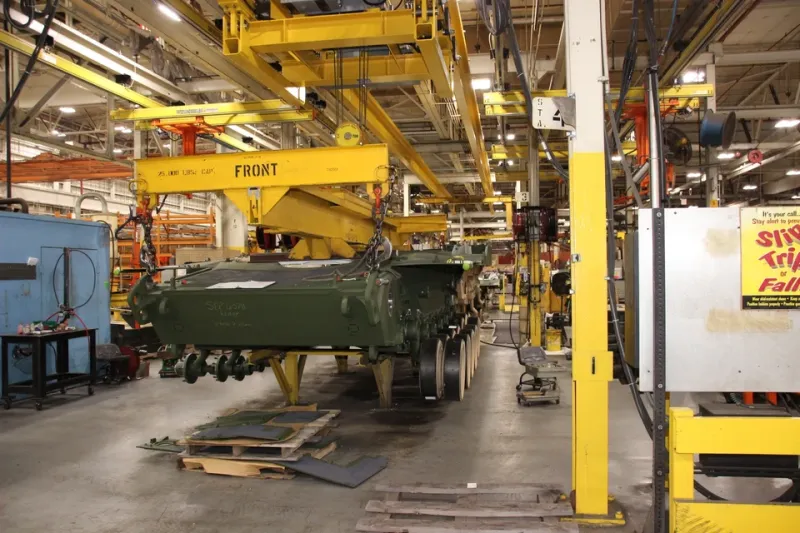
Photo: Brian Hahn, Public domain, via Wikimedia Commons
For much of the past decade, the phrase "global supply chain" carried an undertone of anxiety in American boardrooms. Disruptions stemming from the COVID-19 pandemic, compounded by geopolitical tensions and escalating freight costs, forced executives across industries to confront the fragility of systems they had once considered untouchable. Yet, in 2024, a quieter and more consequential story is unfolding: US manufacturers are not retreating from the global economy—they are engaging with it more strategically than ever before.
At Noor Safi Group, we work at the intersection of international commerce and operational strategy, and what we are observing across our partner network is nothing short of a structural shift. The manufacturers succeeding today are those who have transformed their cross-border supply chains from cost centers into strategic assets.
The Post-Pandemic Recalibration
The pandemic exposed a fundamental design flaw in many American supply chains: an over-reliance on single-source procurement. When factories in Southeast Asia shuttered and container ships sat idle off the coast of Long Beach, the consequences were swift and severe. Automotive plants idled for want of microchips. Consumer goods shelves went bare. Healthcare systems scrambled for personal protective equipment.
The response from US manufacturers has been methodical. Rather than wholesale reshoring—a strategy that, while politically appealing, often proves economically prohibitive—many companies have adopted a "China Plus One" or multi-regional sourcing model. This approach maintains the cost efficiencies of established manufacturing hubs while introducing geographic redundancy. Vietnam, Mexico, India, and Morocco have all seen significant inflows of US manufacturing investment as a result.
Mexico, in particular, has emerged as a cornerstone of this new architecture. Under the United States-Mexico-Canada Agreement (USMCA), manufacturers operating in Mexico benefit from preferential tariff treatment, reduced logistics costs compared to transoceanic shipping, and time-zone alignment that facilitates real-time operational oversight. Companies in the automotive, electronics, and aerospace sectors have been especially active in expanding their Mexican manufacturing footprints.
Tariff Navigation as a Competitive Skill
One of the most underappreciated competencies in modern manufacturing is tariff engineering—the deliberate structuring of supply chains to minimize duty exposure without compromising product quality or delivery timelines. In an environment where Section 301 tariffs on Chinese goods remain elevated and new trade policy proposals surface with each election cycle, this skill has become genuinely strategic.
Consider the case of a mid-sized American electronics manufacturer that, prior to 2020, sourced the majority of its printed circuit board assemblies from a single supplier in Shenzhen. Facing 25 percent tariffs and extended lead times, the company restructured its procurement across three countries: final assembly remained in China for certain product lines, while a new supplier relationship in Malaysia absorbed higher-complexity components, and a domestic partner in Texas handled final integration for government contracts requiring US-origin content.
The result was a reduction in effective duty burden of approximately 18 percent, a decrease in average lead time of 11 days, and—critically—the ability to credibly market certain product lines as domestically assembled. The operational complexity increased, but so did the margin and the defensibility of the business model.
Logistics Innovation and the Role of Technology
Modern cross-border supply chains are increasingly underpinned by digital infrastructure that would have been prohibitively expensive for all but the largest corporations just five years ago. Cloud-based visibility platforms, AI-driven demand forecasting tools, and blockchain-enabled documentation systems have democratized supply chain sophistication, allowing mid-market manufacturers to operate with a level of precision previously reserved for Fortune 500 companies.
Real-time shipment tracking, automated customs documentation, and predictive disruption modeling are now accessible through software-as-a-service platforms at monthly subscription costs that fit within operational budgets. For US manufacturers managing suppliers across multiple continents, these tools have reduced the administrative burden of compliance while simultaneously improving the accuracy of inventory planning.
At Noor Safi Group, we have seen firsthand how the integration of these technologies into cross-border operations creates compounding advantages. When a manufacturer can anticipate a port congestion event in Rotterdam three weeks in advance and reroute shipments accordingly, the downstream impact on production schedules—and customer commitments—is materially reduced.
Regulatory Compliance: The Foundation of Sustainable Global Operations
No discussion of cross-border manufacturing strategy is complete without addressing the regulatory dimension. US manufacturers operating internationally must navigate an increasingly complex web of compliance obligations: export control regulations administered by the Bureau of Industry and Security, customs valuation rules enforced by US Customs and Border Protection, environmental standards required by destination markets, and labor compliance frameworks tied to trade agreement eligibility.
The consequences of non-compliance are not merely financial. Reputational damage, loss of export privileges, and exclusion from government procurement programs represent existential risks for manufacturers in certain sectors. The companies that manage these obligations most effectively are those that treat compliance not as a legal checkbox but as an operational discipline—embedding it into supplier onboarding, contract structures, and ongoing monitoring protocols.
This is an area where experienced international business partners provide measurable value. The institutional knowledge required to maintain compliance across multiple jurisdictions simultaneously is not easily built in-house, particularly for companies in the early stages of international expansion.
Building Value Across Borders
The manufacturers thriving in 2024 share a common orientation: they view the complexity of global supply chains not as a burden to be minimized but as a capability to be developed. Each tariff navigated, each new supplier relationship established, and each compliance framework mastered represents a layer of competitive insulation that is genuinely difficult for competitors to replicate quickly.
This is the core thesis that informs Noor Safi Group's approach to international business development. Geographic borders, regulatory environments, and cultural differences are not obstacles to commerce—they are the terrain on which durable competitive advantages are built. American manufacturers that invest in the knowledge, relationships, and systems required to operate effectively across those borders are not simply reducing costs. They are constructing something more valuable: a business architecture that is resilient, adaptable, and positioned to capture opportunity wherever it emerges.
The American factory floor is not disappearing. It is evolving—and its most important inputs are increasingly global in origin, even as its output remains distinctly American in character.