Proof at the Source: How Clean-Origin Verification Is Reshaping What American Buyers Will Pay For

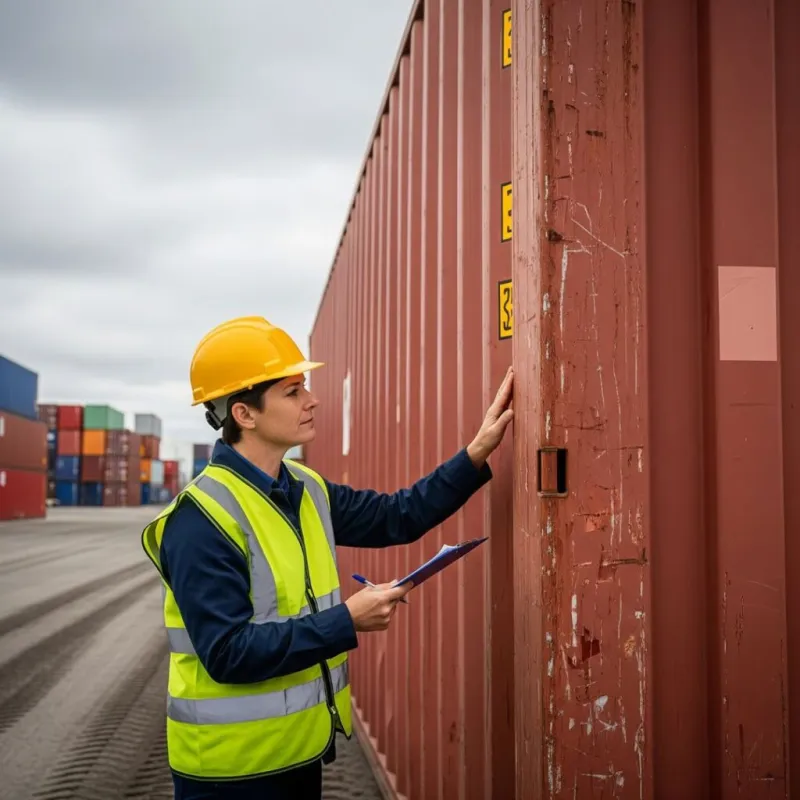
Photo: warehouse worker inspecting shipping containers supply chain quality control, via thumbs.dreamstime.com
The New Question at the Negotiating Table
For decades, procurement conversations in the United States revolved around three variables: price, quality, and lead time. A fourth variable has now forced its way to the head of the table — provenance. American buyers, whether consumer-facing brands or industrial procurement teams, increasingly want documented assurance that what they are purchasing was sourced, produced, and transported without contamination, coercion, or concealment.
The market has responded with what analysts have begun calling the purity premium: a measurable price and trust advantage accruing to suppliers who can verify their supply chains end to end. This is not a niche trend confined to organic grocery shelves. It is surfacing in electronics components, apparel, food ingredients, construction materials, and industrial inputs — anywhere that opacity creates risk and verification creates confidence.
Why Verification Now Commands a Price
Several forces have converged to make clean origins commercially valuable rather than merely virtuous.
First, the regulatory environment has hardened. The Uyghur Forced Labor Prevention Act, the FDA's evolving food traceability requirements, and tightening due diligence expectations under customs law have shifted the burden of proof onto importers. A shipment that cannot document its origin is no longer simply a compliance inconvenience; it is a potential seizure, a delayed product launch, and a public relations exposure.
Second, consumer scrutiny has matured. American shoppers have grown skeptical of vague sustainability claims, and class-action litigation over misleading "clean" or "ethical" labeling has taught brands that unverifiable assertions are a liability. The result is a demand for evidence, not adjectives.
Third, business customers are cascading their own obligations downstream. A mid-sized supplier to a national retailer may discover that its contract now includes audit rights, disclosure requirements, and origin certifications that were unimaginable five years ago. Verification has become a condition of market access.
The Anatomy of the Premium
The purity premium manifests in three distinct ways, and understanding each is essential to capturing it.
Price uplift. Products with third-party verified provenance routinely command higher margins, particularly in categories where consumers make values-driven choices — food, apparel, personal care, and home goods. In B2B contexts, the uplift appears as contract preference: buyers will pay a modest premium for suppliers who reduce their compliance burden.
Access advantage. Verified suppliers get into rooms that opaque competitors cannot enter. Government procurement, major retail vendor programs, and multinational supply agreements increasingly screen for documented ethical sourcing before price negotiations even begin.
Resilience discount reversal. Opaque supply chains carry hidden costs — disruption risk, remediation expense, reputational drag. Buyers have begun pricing this risk into their decisions, effectively penalizing suppliers who cannot demonstrate control over their networks.
Building a Clean-Origin Strategy
For American companies and their international partners, capturing the purity premium requires more than a certificate on a website. It demands a deliberate architecture built on four pillars.
1. Map to the mine, farm, or mill. Generalized supplier lists are no longer sufficient. Companies need sub-tier visibility — identifying where raw materials actually originate, not merely who invoiced them. Digital traceability platforms, blockchain-backed provenance records, and isotope or DNA-based material testing have made this feasible at scales that were previously impractical.
2. Vet partners as rigorously as you audit products. Provenance is only as credible as the intermediaries handling it. Structured partner vetting — financial diligence, site verification, labor practice review, and ongoing monitoring — transforms a paper trail into a defensible one. This is where experienced cross-border intermediaries add disproportionate value: local knowledge and long-standing relationships often surface what a checklist cannot.
3. Document for the auditor you hope never arrives. Verification that exists only in marketing materials is fragile. Clean-origin programs should be built to withstand customs scrutiny, customer audits, and litigation discovery. That means chain-of-custody documentation, timestamped records, and clear accountability at every handoff.
4. Communicate with precision, not superlatives. The legal environment punishes overclaiming. Companies should market what they can prove — specific certifications, named origins, verifiable labor standards — and resist the temptation to launder vague claims through aspirational language.
The Strategic Reframe
It is tempting to treat ethical sourcing as a cost center — one more compliance line in an already complex trade environment. The companies capturing the purity premium have reframed it entirely. For them, verified provenance is a product feature, as tangible as durability or performance. It justifies pricing, unlocks channels, and builds customer loyalty that discounting cannot buy.
This reframe also changes how companies select international partners. Rather than seeking the lowest-cost route to market, they seek partners whose operational integrity can withstand scrutiny — partners who treat transparency as infrastructure rather than obligation. In our own work across global markets, we have observed that the suppliers who invest in verifiable clean origins are frequently the same ones who invest in quality, reliability, and long-term relationship value. Integrity, it turns out, rarely exists in isolation.
What Comes Next
The purity premium is likely to widen before it narrows. As traceability technology becomes cheaper and regulatory expectations continue to rise, the gap between verified and unverified supply chains will become harder to ignore — and more expensive to close late. American companies that build clean-origin capabilities now will hold a durable advantage: not merely the ability to make claims, but the ability to prove them.
In a market where trust is the scarcest commodity, proof is the most valuable product feature of all.